Foggy or Cloudy Window Glass? Seal Failure, Low-E Coating Failure and How the Glass Gets Replaced
Fogging, cloudiness or white speckling between the panes of a window means the insulating glass seal has failed. Moisture gets into the sealed space between the panes and, over time, damages the Low-E coating on the inner glass surfaces. It cannot be cleaned or wiped away. The repair is to replace the insulating glass unit in the existing sash or frame, not the whole window. UTS ServicePros does that field glass replacement across the lower 48 states and western Canada two ways: dispatched by the manufacturer when the glass is under warranty, or quoted directly to the property owner when the labor, or the whole repair, is not covered.

What You Are Seeing: Seal Failure and Low-E Coating Failure
Foggy or cloudy glass in your windows is usually a seal failure or a Low-E coating failure, and it is one of the most common window problems we repair. Glass work appears in 33% of the 246,000+ door and window work orders with a written request that UTS ServicePros handled between January 2008 to September 2026, more than any other component.
A modern window pane is really an insulating glass unit, or IGU: two or three panes held apart by a spacer and sealed around the edge. The space between them is filled with dry air or an inert gas such as argon or krypton, and most units carry a Low-E coating, a nearly invisible layer of silver on one or more of the glass surfaces that reflects heat back where it came from. The silver-based “soft coat” Low-E used in most residential glass is made to work inside a sealed unit, protected from outside air.
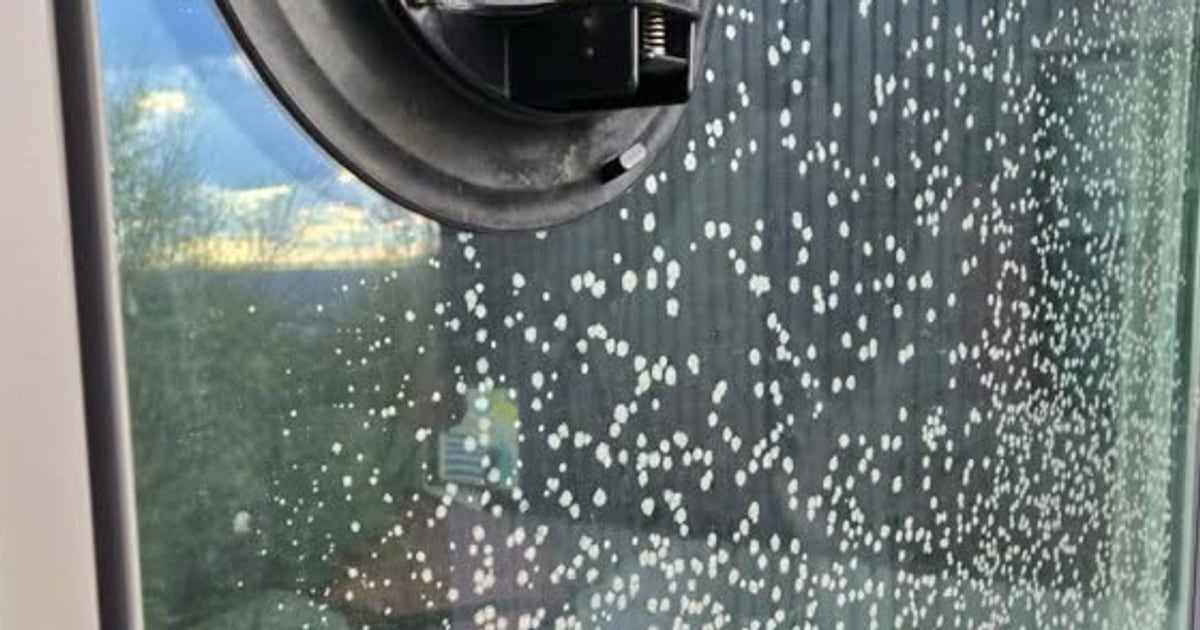
Seal failure happens when moisture gets trapped between the two panes. Over time that moisture damages the Low-E coating and creates speckling, cloudiness or discoloration inside the glass. It often starts as light fogging that comes and goes with the weather, and gets worse as the seal keeps breaking down. The photograph above was taken by one of our service contractors on a service call, with a suction lifter on the pane. The white speckling is Low-E coating damage on the inside of the sealed unit, where no amount of cleaning can reach it.
How to Tell Seal Failure From Ordinary Condensation
Not every foggy window has a failed seal. Condensation that forms on the room-side face of the glass comes from humidity in the house, and it wipes off. Moisture on the outdoor face is weather, and it wipes off too. Neither is a failure of the glass, and manufacturer warranties treat condensation from indoor humidity as a separate matter from a failed seal.
Seal failure is the fog, haze or speckling you cannot touch because it is between the panes. If you wipe both faces of the glass and it is still there, the seal has failed. That is the condition glass warranties are written around: a permanent obstruction of vision caused by a failure of the glass seal.
If you plan to request a repair quote, photograph the glass straight on and at a slight angle so the fog or speckling shows up. Include any label on the window and any printing on the spacer bar between the panes, which often identifies who made the glass and when.
The Fix: Replace the Glass Unit, Not the Window
UTS ServicePros specializes in field service glass replacement, whether it is covered by the manufacturer’s warranty or paid for directly by the property owner. A failed seal cannot be restored in place, so the repair is a new sealed glass unit made to the same size and makeup as the original, including its glass thickness, Low-E coating and gas fill. The contractor removes the failed unit from the existing sash or frame and glazes in the new one.
The frame, the trim, the interior finish and the window’s seal to the wall all stay where they are. That usually makes replacing the glass faster, cheaper and far less disruptive than replacing the window. No new rough opening, no new flashing and no repainting of the wall around it.
The industry’s own references govern both halves of the job. Sealed insulating glass is tested for seal durability to ASTM E2190, the standard specification for insulating glass unit performance, and the IGCC/IGMA certification program certifies units to it. How a unit is set into a frame, including setting blocks, edge clearances, spacer shims, glazing materials and handling, is the subject of IGMA TM-3000, the North American glazing guidelines for sealed insulating glass. Both are now maintained by the Fenestration and Glazing Industry Alliance (FGIA). FGIA was formed on January 1, 2020, when AAMA and the Insulating Glass Manufacturers Alliance combined, and it also publishes the North American Fenestration Standard for the window as a whole.
Route One: Covered Under the Manufacturer’s Warranty
If the glass is covered under warranty, the manufacturer orders the replacement unit and sends a service dispatch to UTS ServicePros. The dispatch carries the homeowner’s address and contact information, the size and quantity of glass being sent, the glass order details including its ETA and where it is shipping, and any known jobsite details, such as elevation, residence type and access restrictions.
From there, UTS ServicePros enters the dispatch into its proprietary field service platform, contacts the homeowner to introduce the company and review the dispatch details, and begins scheduling around the glass ETA. Once the service is complete, UTS ServicePros sends the manufacturer the details of the service performed.
This is how the strongest warranties in the industry reach the homeowner. Pella, one of the most trusted brands in windows and doors, shows what that commitment looks like: a strong promise to its customers, and a quality product backed by an inclusive written warranty, with glass seal coverage of twenty years on its vinyl windows. See Pella’s window and door warranties.
For a manufacturer, that splits the job cleanly: you make and ship the glass, and we handle the house. The homeowner deals with one vetted independent contractor, and you get a documented record of the visit without staffing glaziers in every market. to set up your glass dispatches.
Route Two: Glass Covered but Labor Not, or No Coverage at All
Glass warranties often run longer than the labor coverage attached to them. A homeowner with a failed unit later in the life of the glass warranty may receive the replacement glass at no charge and still need someone to install it.
When the parts are covered under warranty but the labor to replace them is not, UTS ServicePros can quote the customer directly as a Consumer Direct field service (who pays when the glass is covered but the labor is not). The customer completes the Get a Repair Quote form on utsservicepros.com, and the UTS ServicePros team contacts them directly to review the request and quote the glass replacement. The same route serves a window that is entirely out of warranty.
UTS ServicePros requires prepayment on all Consumer Direct services. Once payment is made, the service dispatch is created and the same steps are followed as a manufacturer dispatch: the same contractor network, the same workmanship standard and the same documentation.
What the Replacement Solves
For the property owner, a new sealed unit brings back a clear view and restores the glass to the way it was designed to work, with the coating protected inside a sealed space and the gas fill held in again. It also saves replacing a window whose frame, hardware and installation are still sound.
Waiting does not help. A failed seal only gets worse, and once moisture has damaged the Low-E coating, that damage is permanent. The earlier the unit is replaced, the sooner the view and the glass’s insulating performance come back.
For the manufacturer, it means a warranty obligation carried out in the field across the lower 48 states and western Canada, by an independent contractor matched to the address and qualified for glass work, with a record of the work returned for every job. The homeowner experiences the manufacturer keeping its promise, which is the point of the warranty.
Technical references
- ASTM E2190-19, Standard Specification for Insulating Glass Unit Performance and Evaluation — ASTM International. The performance and durability standard that sealed insulating glass units are tested against.
- IGCC/IGMA Certification Program for the Harmonized Insulating Glass Standard (ASTM E2190) — Fenestration and Glazing Industry Alliance (FGIA). Third-party certification of sealed insulating glass to ASTM E2190.
- IGMA TM-3000, North American Glazing Guidelines for Sealed Insulating Glass Units for Commercial & Residential Use — Fenestration and Glazing Industry Alliance (FGIA). Industry guidance on framing, clearances, setting blocks, spacer shims, glazing materials and handling of sealed insulating glass.
- AAMA/WDMA/CSA 101/I.S.2/A440-26, North American Fenestration Standard/Specification for windows, doors, and skylights — Fenestration and Glazing Industry Alliance (FGIA), WDMA and CSA Group. The performance standard for the window, door or skylight as a whole. The 2026 edition supersedes the 2022 edition.
- AAMA and IGMA Officially Combine as Fenestration and Glazing Industry Alliance — Window + Door. FGIA was formed on January 1, 2020, when AAMA and IGMA combined.
- High-Performance (ENERGY STAR) Windows — U.S. Department of Energy, Building America Solution Center. Low-E coatings as a nearly invisible layer of silver; argon or krypton gas fill between the panes; insulating spacers.
- Low-E (LoĒ) Glass — Cardinal Glass Industries. Soft-coat, silver-based Low-E is applied in layers under vacuum and works inside a sealed insulating glass unit.
- How Low-e Glass Works — Vitro Architectural Glass. Sputtered (soft-coat) Low-E is typically sealed inside an insulating glass unit.
- Window and Door Warranties — Pella Corporation. Pella’s written product warranties. Its vinyl window and patio door warranty covers non-laminated glass against seal failure for twenty years.
- Door & Window Warranty Field Record — UTS ServicePros. Glass work appears in 33% of 246,000+ work orders with a written request, January 2008 to September 2026.