Why Documentation Is Your Best Defense Against Product Liability Lawsuits
When a product liability lawsuit arrives, the manufacturer's fate is determined not by the quality of the product, but by the quality of the documentation. A manufacturer with thorough, timestamped, photographically supported warranty service records can often achieve dismissal. A manufacturer with sparse, inconsistent, or missing records almost always faces settlement pressure. The difference is documentation discipline.

The Litigation Landscape for Window and Door Manufacturers
Product liability litigation against window and door manufacturers has increased significantly over the past decade. Plaintiffs' attorneys have become sophisticated in building class-action cases around alleged systematic defects — seal failures, frame warp patterns, hardware corrosion, or water intrusion paths. The typical lawsuit alleges that the manufacturer knew or should have known about the defect, failed to warn consumers, and breached its warranty obligations.
The damages sought in these cases extend far beyond the cost of replacement products. They include property damage (water-damaged floors, walls, and furnishings), health impacts (mold-related respiratory issues), emotional distress, and punitive damages for alleged corporate negligence. A single class action can threaten a manufacturer's financial survival.
The manufacturer's defense strategy has three pillars: the product was not defective (design and manufacturing met applicable standards); the alleged damages were caused by other factors (improper installation, maintenance neglect, or unrelated water sources); and the manufacturer fulfilled its warranty obligations completely and in good faith. The third pillar — warranty fulfillment — is where documentation becomes decisive.
A court evaluating whether the manufacturer honored its warranty in good faith will examine the warranty service records. Were claims responded to promptly? Were inspections thorough? Were repairs performed properly? Was the homeowner kept informed? Was the issue resolved to the homeowner's satisfaction? If the records demonstrate systematic, professional, documented warranty fulfillment, the plaintiff's allegation of bad faith collapses. If the records are sparse, inconsistent, or missing, the allegation gains credibility.
The Six Documents That Win Lawsuits
Through analysis of product liability cases in the window and door industry, a clear pattern emerges: manufacturers who prevail in warranty-related litigation share six categories of documentation that manufacturers who settle or lose typically lack. UTS ServicePros generates all six as standard practice for every service event.
Document one: the service request intake record. This captures the date and time of claim receipt, the homeowner's contact information, the product identification (manufacturer, model, serial number, date of manufacture, date of installation), the nature of the complaint in the homeowner's own words, and any preliminary photos or videos submitted by the homeowner. This record establishes the timeline and the scope of the original warranty claim.
Document two: the communication log. This includes all AI-summarized text messages, email exchanges, and phone call summaries between the warranty administrator, the field technician, and the homeowner. The log demonstrates that the manufacturer maintained open, responsive communication throughout the warranty process — a key factor in good-faith evaluation.
Document three: the inspection report. This is the technical foundation of the defense. It includes the technician's observations, measurements, diagnostic conclusions, and a determination of whether the issue is consistent with a manufacturing defect, an installation error, or environmental factors beyond design specifications. The report is signed by the technician and reviewed by a quality assurance supervisor.
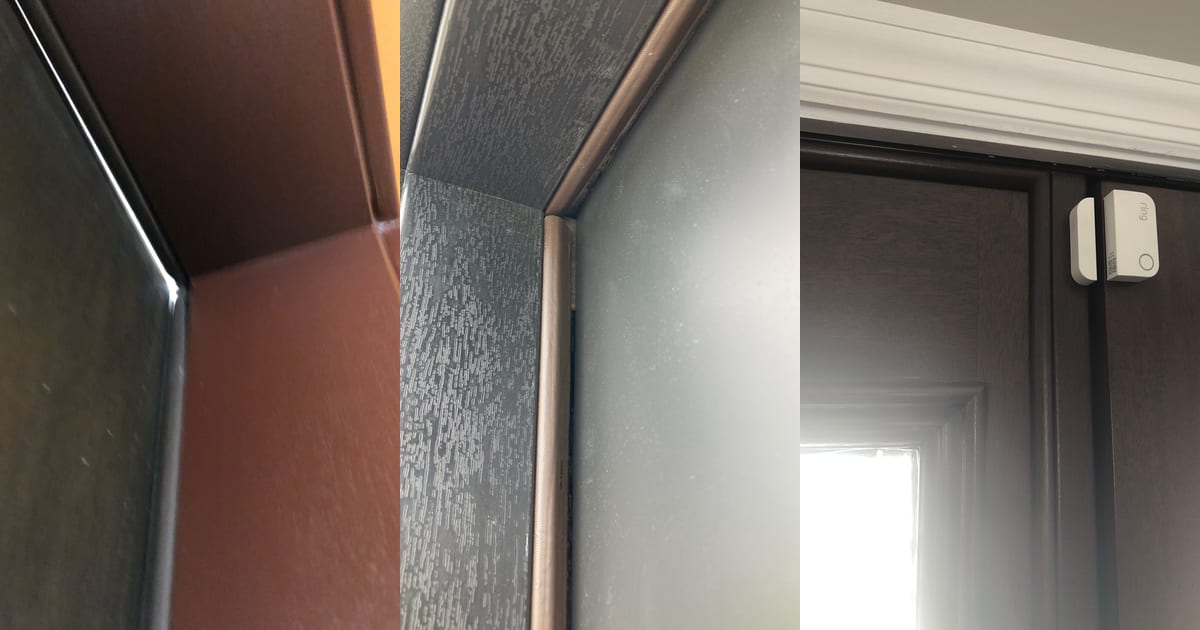
Document four: photographic evidence. Time-stamped, geotagged photographs showing the product condition before service, during disassembly (if applicable), and after repair or replacement. Photos are the most persuasive evidence in court because they are objective, uneditable (when stored in a secure system), and easily understood by jurors.
Document five: the service execution record. This documents all work performed — parts installed, repairs made, adjustments completed, or products replaced. It includes SKU-level parts tracking, labor hours, and a narrative description of the technician's actions. If a callback was required, the record explains why and what was different in the subsequent visit.
Document six: the customer satisfaction confirmation. This is a signed acknowledgment from the homeowner that the service was completed, the issue was resolved to their satisfaction, and they have no remaining concerns. While not legally dispositive, it is powerfully persuasive evidence that the manufacturer fulfilled its warranty obligation completely.
How Documentation Proves Due Diligence
Due diligence is a legal concept with enormous significance in product liability defense. It means that the manufacturer took reasonable steps to ensure product safety, to warn consumers of known risks, and to remedy defects when they occurred. A manufacturer that demonstrates due diligence is far less likely to face punitive damages and far more likely to achieve early dismissal.
Warranty service documentation is the primary evidence of due diligence in the post-sale phase. When a product fails, the manufacturer's response is scrutinized more heavily than the product design itself. Did the manufacturer act promptly? Did they investigate thoroughly? Did they fix the problem correctly? Did they document everything? A "yes" to each question, supported by records, creates a powerful due diligence narrative.
Conversely, the absence of documentation creates a legal vacuum that plaintiffs' attorneys fill with adverse inference. If the manufacturer has no record of what the technician observed, the attorney argues that the technician saw something incriminating and the manufacturer destroyed the evidence. If the manufacturer has no photos, the attorney argues that the product was so obviously defective that photos would have been damning. These adverse inferences are not fair, but they are effective with juries.
UTS ServicePros eliminates the documentation vacuum. Every service event generates a complete, timestamped, photographically supported, digitally signed record stored in a secure system with manufacturer access. When litigation arises, the manufacturer can produce the entire file within hours. That production alone often causes plaintiff's counsel to reassess the case, because a well-documented warranty response is difficult to attack.
The Chain of Custody: Why Digital Storage Security Matters
Documentation is only as valuable as its credibility. If a plaintiff's attorney can argue that the warranty records were altered, backdated, or selectively produced, the records lose their defensive power. The manufacturer must therefore maintain not only complete documentation but also a verifiable chain of custody that proves the records are authentic and untampered.
UTS ServicePros uses a secure digital recordkeeping system with multiple integrity safeguards. All records are timestamped at creation by the system clock, not by user input. Photographs are uploaded directly from the technician's mobile device with embedded EXIF data that includes capture time, GPS coordinates, and device identifier. Communications are logged by the platform automatically, not by manual entry. Reports are digitally signed by the technician and reviewed by a supervisor whose approval is also logged.
The storage system uses role-based access controls that prevent deletion or modification of completed records. Manufacturers have read-only access to their own service records, ensuring that they can review and download files for legal defense but cannot alter them. This architecture creates an audit trail that withstands forensic scrutiny in litigation.
When a manufacturer needs to produce records for litigation, UTS ServicePros provides certified copies with an authentication affidavit attesting to the system integrity and record authenticity. This certification procedure transforms the documentation from internal business records into admissible legal evidence.
Building a Documentation-First Warranty Culture
Documentation discipline is not a software feature. It is a cultural commitment that must be reinforced at every level of the warranty operation. Technicians must understand that their photographs and reports are legal evidence, not administrative paperwork. Dispatchers must enforce documentation completeness before ticket closure. Quality assurance reviewers must reject incomplete records and require rework.
UTS ServicePros builds this culture through three mechanisms. First, technician certification includes legal awareness training — understanding why documentation matters, what plaintiffs' attorneys look for, and how to write inspection reports that are both technically accurate and legally defensible. Second, performance metrics include documentation completeness scores alongside technical quality scores. Technicians with incomplete records face remedial training and, for repeated issues, removal from the network.
Third, quarterly business reviews with manufacturers include documentation quality analysis. We review random samples of completed records, identify trends in completeness and clarity, and recommend improvements. This continuous improvement loop ensures that documentation standards evolve with litigation trends and manufacturer needs.
For manufacturers, the cultural message is equally important. Warranty service is not a cost to be minimized. It is a legal defense to be maximized. Every dollar invested in thorough documentation, delivered through a professional third-party network, returns manyfold in reduced litigation exposure, faster case resolution, and the deterrent effect of a documented compliance posture that discourages plaintiffs' attorneys from filing weak cases.
UTS ServicePros: Your Documentation Defense Partner
UTS ServicePros was built with legal defense as a core design principle, not an afterthought. Our platform, our processes, and our technician training all serve a single goal: ensuring that every warranty service event generates a defensible, complete, authentic record that protects the manufacturer from liability.
When you partner with UTS ServicePros, you are not merely outsourcing field service. You are building a documentation fortress around your warranty operation. Every claim response is logged. Every inspection is photographed. Every communication is recorded. Every repair is documented. Every customer confirmation is signed. The result is a warranty record system that transforms litigation risk into litigation readiness.
In an era of increasing product liability exposure, the manufacturers who survive and thrive are not necessarily those with the fewest defects. They are those with the most complete documentation of their response to the defects that inevitably occur. UTS ServicePros delivers that documentation. We deliver the manufacturer's promise — and we prove it, photographically, timestamped, and defensibly, every single time.