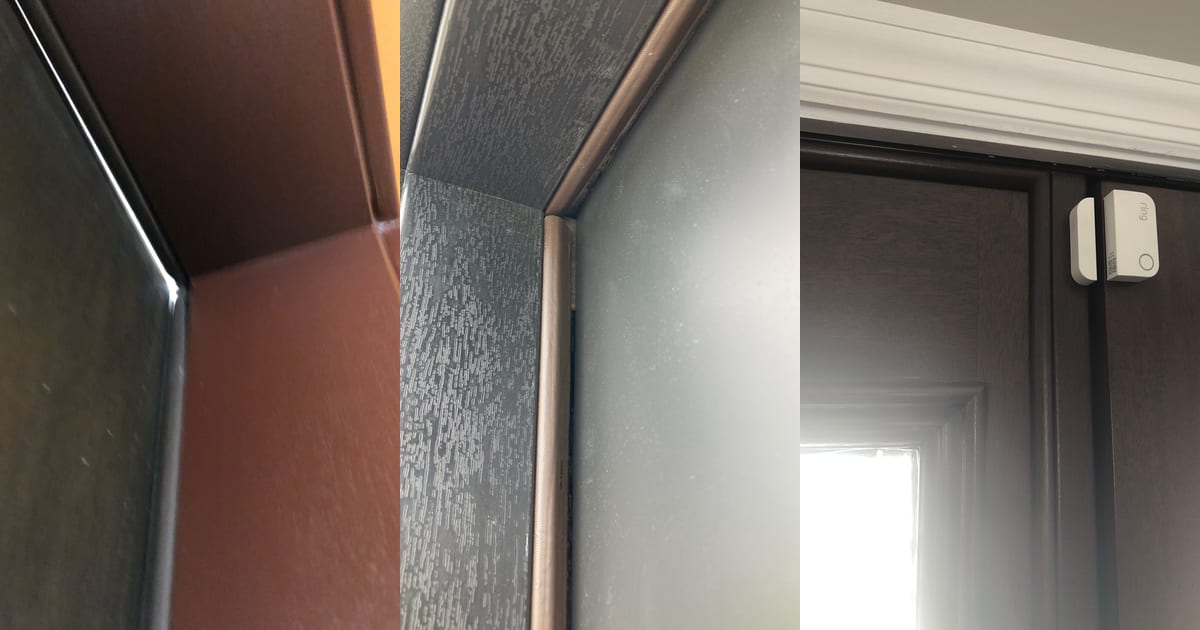
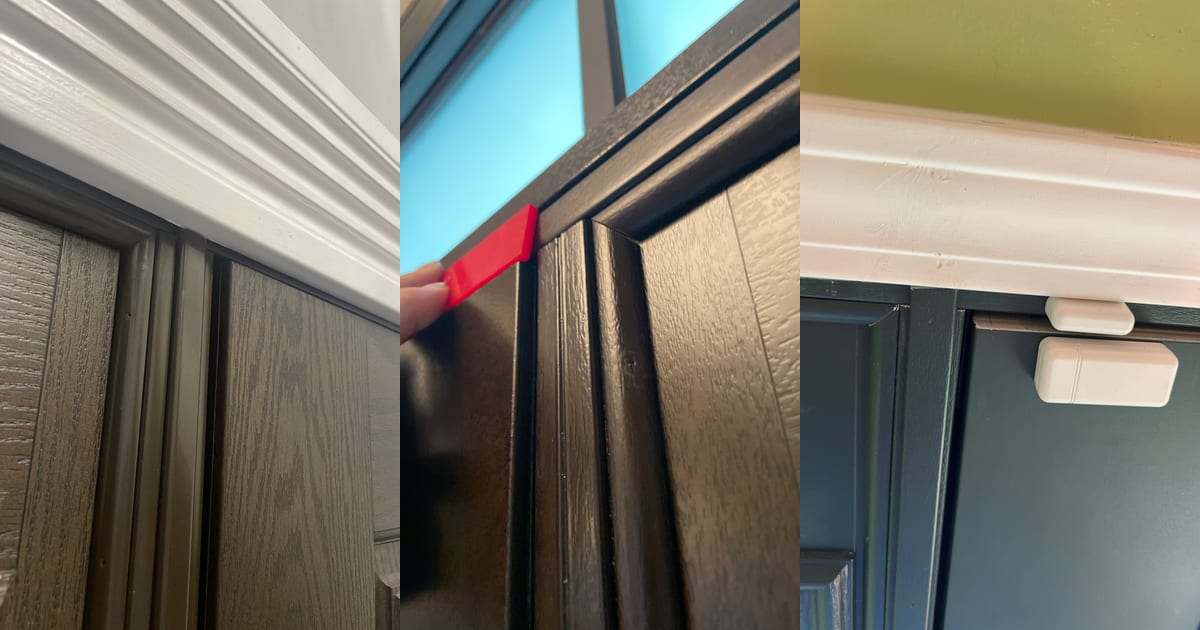
Door Will Not Latch Beside Its Sidelight? Shimming a Warped Mull Instead of Replacing the Unit
A manufacturer asked UTS ServicePros what to do about an entry door that would not seat into its lock mortise and latch because the mull post between the door and its sidelight had warped. Instead of replacing the whole unit, Warranty Service Manager Stephen Somers recommended a repair that works and is the proper process: remove the interior quarter round on the sidelight edge touching the mull, then shim between the sidelight panel and the mull post to move the mull back at the center, where the latch plate meets the handle set. The result is a door that latches, with reveals corrected top to bottom in the 1/8-inch range. One caution comes with it: if the mull keeps warping, the shims leave little room to adjust further.

The Call: A Door That Will Not Latch Beside Its Sidelight
A manufacturer reached out to UTS ServicePros about an entry door with a sidelight. The mull post between the sidelight and the door had warped, and the door panel was not seating into the lock mortise and latching.
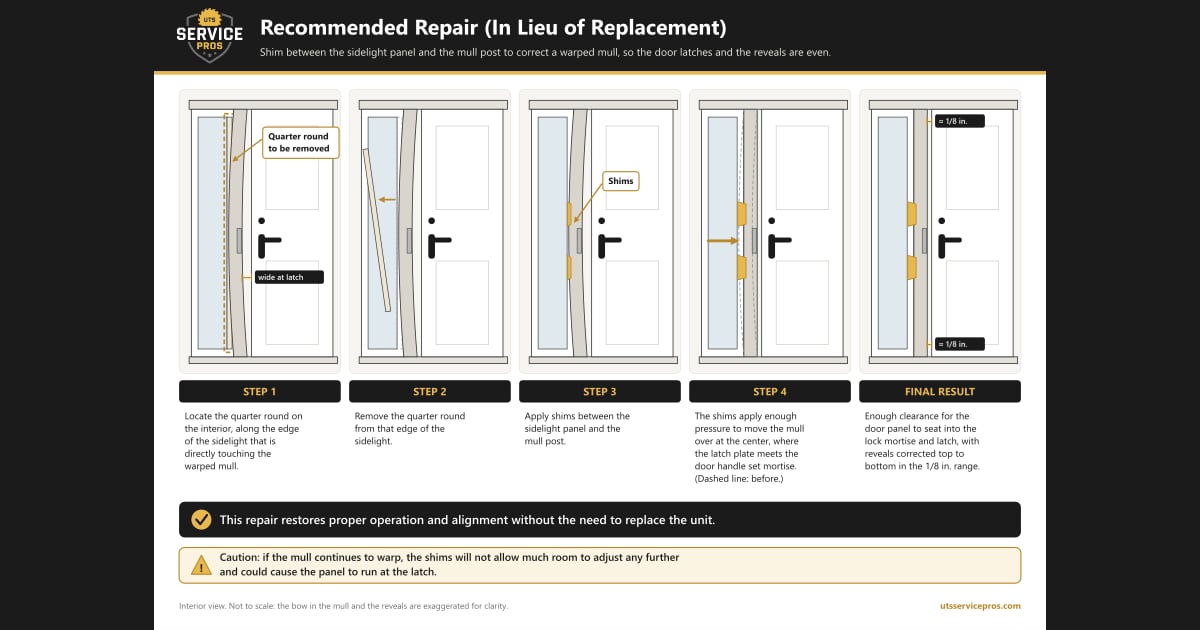
The choice was to replace the whole unit or to repair it by bringing the mull back into line. UTS ServicePros advises manufacturers on calls like this regularly, and here it recommended a repair in lieu of replacement, laid out step by step in the diagram below.
What the Mull Post Does
A sidelight is a companion product installed on one or both sides of a door. In the window and door industry’s own glossary, published by the Window & Door Manufacturers Association, a sidelite is “an operable or non-operable product that is designed to be a companion product installed on one or both sides of an operable door or a fixed door.”
The mull post, or mullion, is the member where the two units meet. Pella’s guide to the parts of a door puts it simply: “A mullion, sometimes referred to as a mull, is where two units are joined together.” On a door like this one, the mull post sits between the sidelight and the latch edge of the door, and it carries the latch plate.
Manufacturers anchor the mull with the latch in mind. JELD-WEN’s installation instructions for its custom wood and fiberglass door systems anchor the mull post to the sidelite with screws 16 inches on center “and under the lock strike location,” and have the installer inspect the unit for “square, level, plumb, twist and even door reveal throughout the fastening process.”
Why a Bow in the Mull Stops the Door From Latching
In this case the mull post had bowed toward the sidelight at its center. That opens the gap between the mull and the door edge at exactly the height of the latch plate and the door handle set mortise, while the top and bottom stay closer to where they should be.
Manufacturers set the gap around a door to a narrow, even range. ProVia’s installation manual for single entry doors with sidelites calls for “a 1/8″ - 3/16″ margin at all corners of the door slab,” including the margin between the door slab and the mull post. Therma-Tru’s installation instructions have the installer make adjustments “so the margins between the door and frame are even top to bottom,” and its instructions for doors with venting sidelites say to adjust the lock side mull post so the weatherstrip contacts the door surface “equally at the top, middle, and bottom.”
The Repair
The repair, in lieu of a replacement of the unit, is to remove the quarter round on the interior, along the edge of the sidelight that is directly touching the warped mull.
Once that quarter round is removed, shims go between the sidelight panel and the mull post. They apply enough pressure to the mull to move it over at the center, where the latch plate meets the door handle set mortise.
That provides enough clearance for the door panel to seat into the lock mortise and latch, and corrects the reveals from top to bottom in the 1/8-inch range. The repair works, and it is the proper process for a mull that has warped this way.
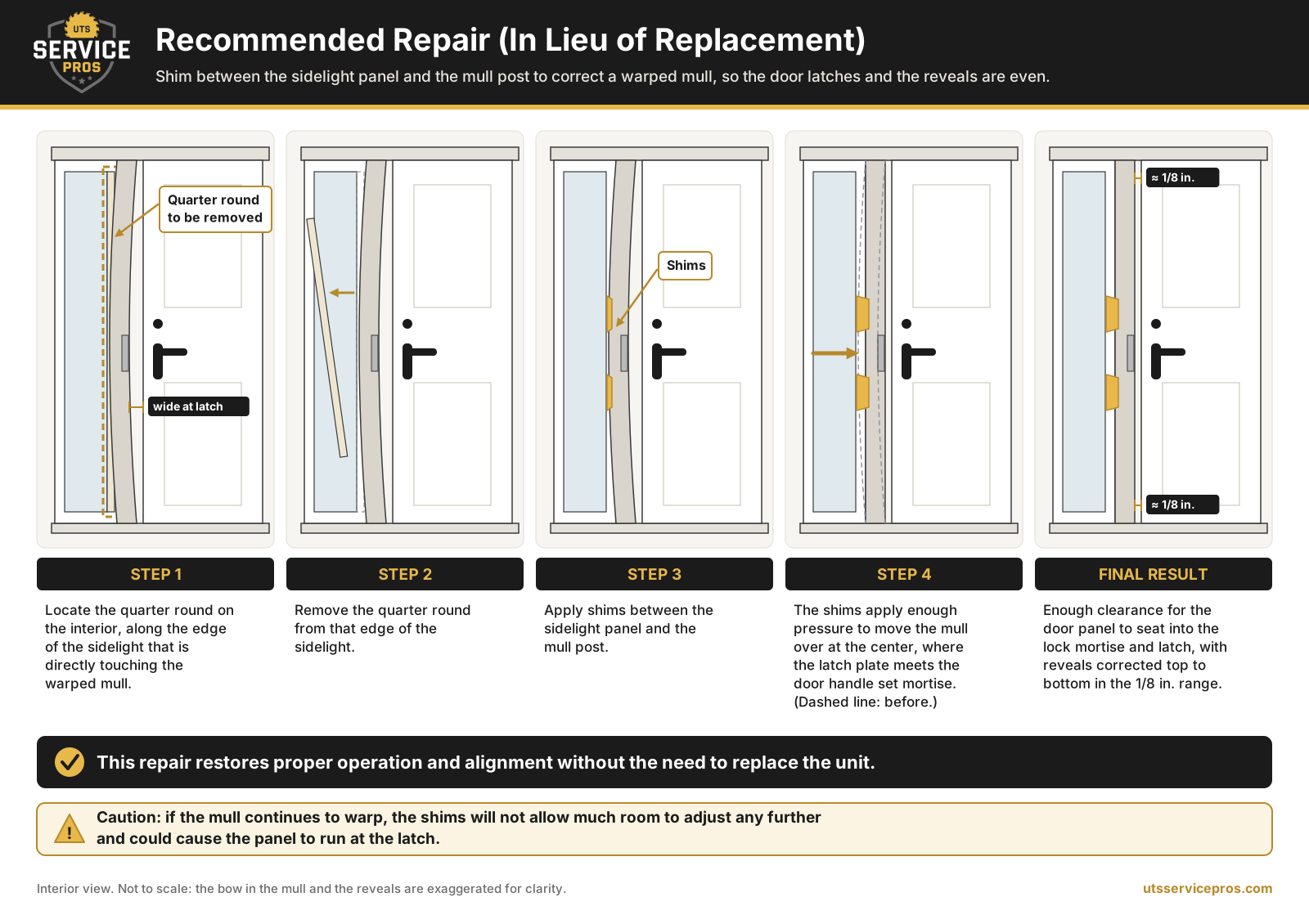
How It Lines Up With Manufacturer Guidance
No manufacturer document we found describes this exact field repair. The principle behind it, shimming at the center where the margin is wide, does appear in their own troubleshooting. ProVia’s troubleshooting table for units with a sidelite on each side lists a “strike-side margin is too wide only near the strike (center)” and gives the remedy: loosen or remove the sidelite screws to shim as needed in that location to achieve proper margin, and “shim tighter in the center of the strike sidelite.”
Therma-Tru’s instructions make the same point about where shims belong on the latch side: “Close the door and carefully shim between the jamb and the opening behind the adjustable strike plate area.”
The Caution
This repair comes with one concern: if the mull continues to warp. If the shims go in at this location and the mull warps further, the shims will not allow much room to adjust any further and could cause the panel to run at the latch.
Why Recommend a Repair Before a Replacement
Replacing the unit is the other option, and it is a bigger job than it sounds. Every job is different, but any interior trim in the way has to be removed before a new unit goes in, and a full door unit is a heavier, longer job than a shim repair.
UTS ServicePros is the manufacturer’s arm for due diligence. When a repair restores proper operation and alignment without replacing the unit, the manufacturer should see that option, with its limits stated plainly, before deciding. Start a manufacturer consultation to set up door inspections and service through UTS ServicePros.
Technical references
- The Window Glossary — Window & Door Manufacturers Association (WDMA). Definition of a sidelite as a companion product installed beside a door.
- Parts of a Door — Pella Corporation. A mullion, or mull, is where two units are joined together.
- Installation Instructions for Custom Wood and Fiberglass Door Systems with Hardwood Frames (JII-90072) — JELD-WEN. The mull post is anchored to the sidelite, including under the lock strike location; inspect for even door reveal.
- Installation Instruction Manual: Single Entry Door with Sidelite(s), FrameSaver (Version 3.2, September 22, 2026) — ProVia. A 1/8- to 3/16-inch margin at all corners, including slab to mull post; troubleshooting for a strike-side margin too wide only at the center.
- Installation Instructions for Pre-hung Door Systems — Therma-Tru Doors. Shim behind the adjustable strike plate area; margins even top to bottom.
- Installation Instructions for Single Door with 2 Venting Sidelites Systems — Therma-Tru Doors. Adjust the lock side mull post so the weatherstrip contacts the door equally at the top, middle and bottom.